by Louise Barden - Designer and copywriter at me&you
Turn on your news outlet of choice on any given day and you’re likely to come away with a distinct sense of gloom. Whether it’s the effects of climate change, economic slumps, or the prospect of an AI uprising, there seems little to be hopeful about in the world right now.
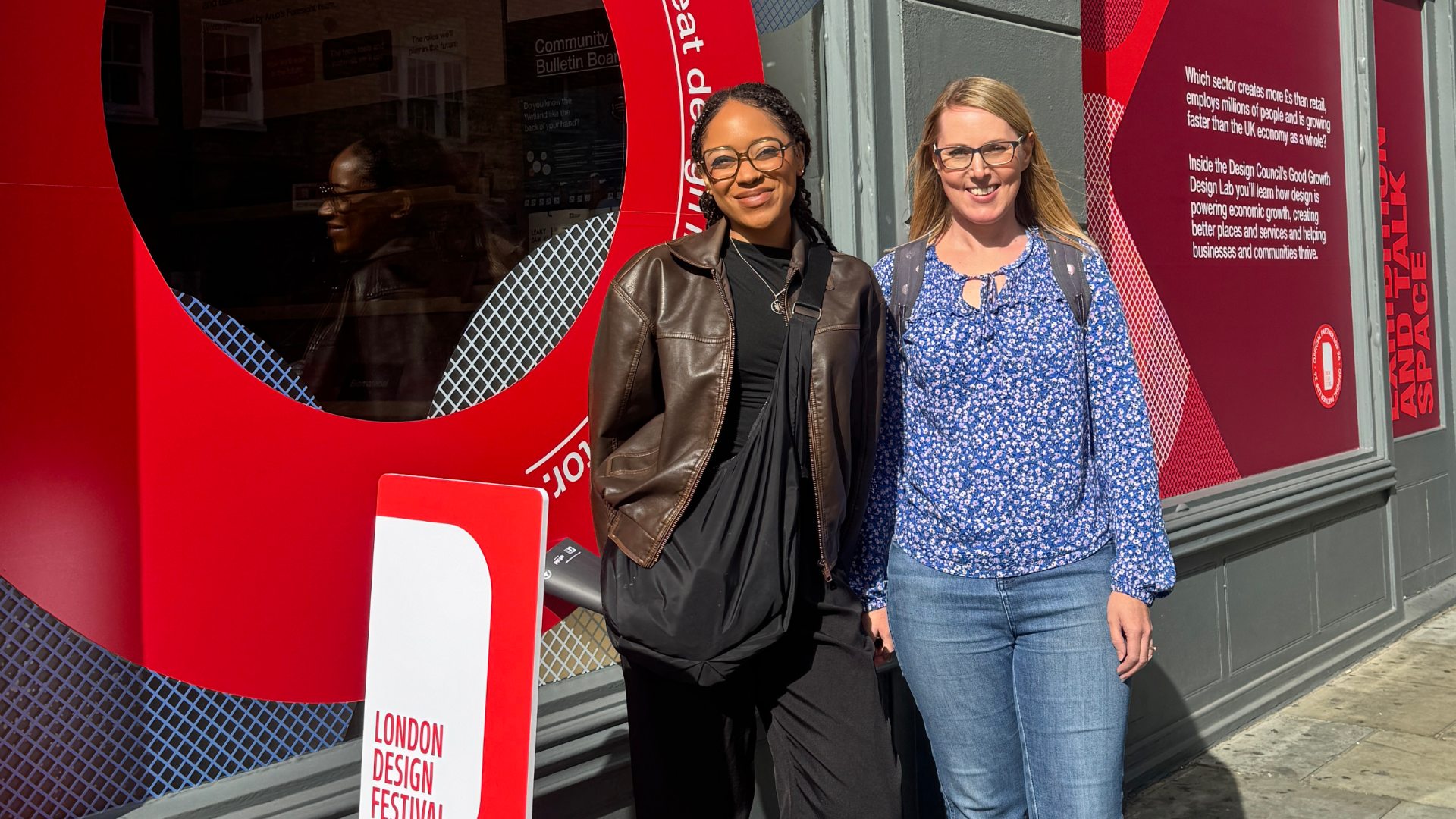
But after a recent visit to Shoreditch Design Week, we came away feeling uplifted, with a sense that there is hope for humanity after all.
The event, part of London Design Festival, showcased a wide variety of designers and makers and offered a vital reminder: design is alive, deeply human, and full of radical hope.
Here are 10 of our highlights and the lessons we learned:
1. Creative partnerships help shape the outcome in positive ways
During one of the Speakeasy Sessions, Phoebe Stubbs from glassmaking collective Gather shared that their clients often come to them with a polished (and often AI generated) visual of what they imagine the final product to look like. However, once the client visits their studio, meets the makers and experiences the creative process for themselves, their vision of their new product changes and adapts.
This is a great lesson to not get ideas too polished too soon. Sure AI can generate slick-looking visuals and mockups in seconds, but the polish is only for the very final stage. We mustn’t fall into the trap of skipping the groundwork or settling for things too early.
2. Design is helping to grow the UK economy
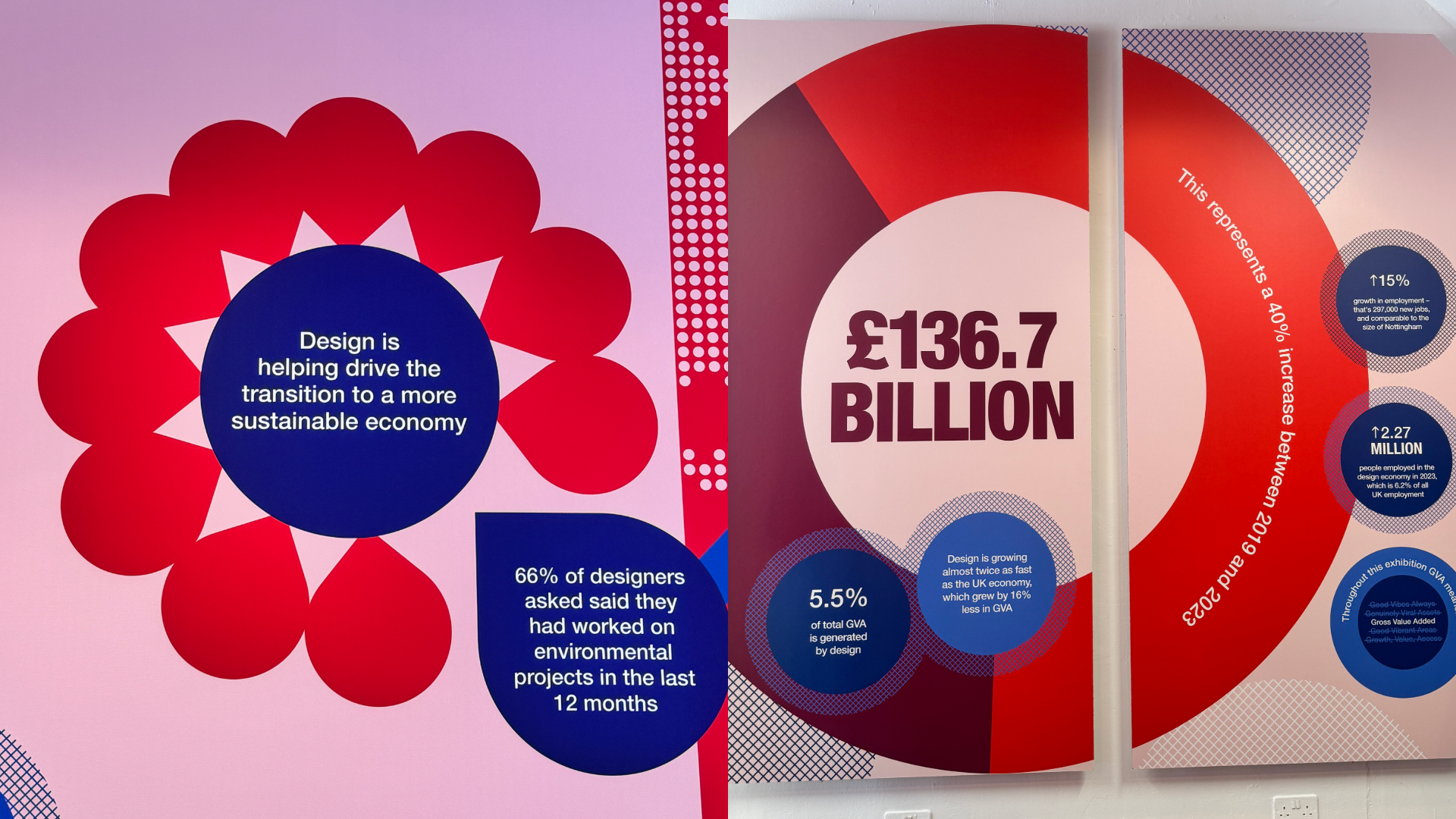
At the Design Council’s Good Growth Lab exhibition, we celebrated statistics showing how design is positively impacting the economy.
There we learned that…
- The design sector grew by 40% between 2019 and 2023 - growing almost twice as fast as the broader UK economy (which grew by 16%)
- Design generates more GVA than both retail (£114bn) and accommodation & food services (£70bn)
- The UK design economy generated £136.7 Billion in total Gross Value Added (GVA), which means that 5.5% of total UK Gross Value Added (GVA) was generated by design
- The design economy accounts for £88.2 billion in export value, representing 10% of all UK exports and 17% of all UK service exports.
Not only this, 66% of designers surveyed said they had worked on environmental or circular economy projects in the last 12 months. Now that’s an encouraging figure!
3. Design has the power to create a fairer economy across the globe
During a discussion about ‘collectable design’, one maker in the audience raised an interesting point. She said that design has the opportunity to become a kind of Robin Hood, taking from the rich and giving to the poor.
By selling handcrafted pieces of design to wealthy collectors, the people who created them, (often based in less developed countries) can, and should, be fairly and financially rewarded for their time, creativity and craftsmanship. Hence design can be used to create a more sustainable global economy, where makers are treated more ethically and fairly.
4. Collaboration helps us achieve more
“What can we do together that we can’t do alone?” This is the mantra of glassmaker Phoebe Stubbs who heads up bespoke glassmaking studio Gather. And it’s a good one.
At me&you, we take a collaborative approach to all our projects. It’s why we chose our name. We believe that when our team works closely together with our clients, we all learn, we spark more ideas and create more impactful solutions than any of us could do alone.
5. Lived experience is helping create more user-friendly design solutions
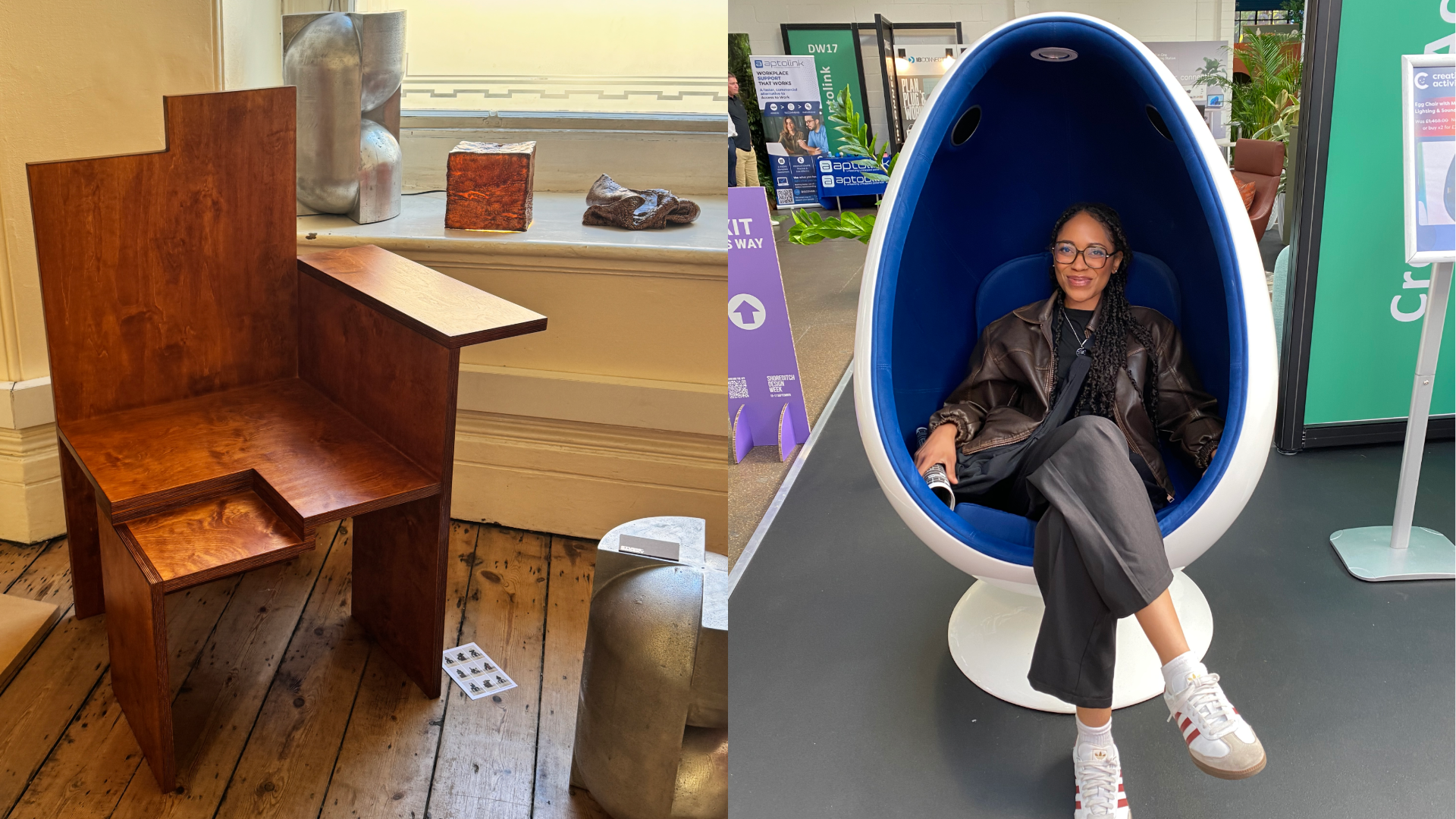
Fed up of people always telling her she wasn’t sitting on a chair ‘properly,’ furniture maker Mara Bragagnolo created her Bad Posture chair. Inspired by her own experience of not sitting on chairs like everyone else, the chair gives the sitter multiple different seating positions depending on how they feel most comfortable.
At Neuroplaces we saw inclusive, sensory-considered furniture designed specifically for autistic children, and interactive learning games for those with limited mobility. More evidence that user-focused, experiential design can directly improve people’s everyday lives.
The more we can draw on personal lived experience, the more we can create products, communications and solutions that truly connect with people in meaningful and positive ways.
6. Respecting traditional ways of doing things doesn’t mean being a slave to them
At The House of Icon, we saw modern light fittings created using techniques traditionally used for making toys. The designer noticed that these heritage craft skills were dying out due to low demand for those kinds of products. She saw an opportunity to use traditional techniques, but apply them in a different way.
She took techniques that worked, used more sustainable materials and changed their application and use, giving old skills and techniques a whole new, purposeful future.
This is a valuable lesson for us all. We should remain open to using whatever methods, skills, techniques or technology that work best for us, whether old or new.
7. We need to get comfortable with ‘failure’
Several of the makers, particularly ceramic artists, in the Speakeasy Session discussed their reactions when their creations hadn’t turned out the way they’d hoped or expected.
First came disappointment, later followed by acceptance and recognition of a different kind of beauty.
Failure is not a flaw, it’s an essential step in both life and making. We learn, grow and develop when we make mistakes. Sometimes we can have ‘happy accidents’ when things don’t go the way we planned, but they work out better or become even more beautiful.
As we referenced earlier, AI can give the impression of gloss and perfection, but often it’s the flaws or imperfections that add to the beauty of something. The making process becomes a one-of-a-kind fingerprint that represents authenticity and human connection.
8. Tech advances are helping create positive environmental impact
It feels like the world is on fire right now and it’s easy to feel powerless in the face of climate change. But at the festival we saw innovative products and materials that used natural dyes in place of toxic paints, concrete that used bacterial processes to replace harmful resins and colourful lights made from seaweed.
It was a great reminder that, in the right hands, technology can help us create more sustainable solutions, but it’s up to all of us to choose them over less green (and often cheaper) options.
9. Waste can be beautiful
The world we live in now has created a distance and a disconnect from the making process. Everything we buy is mass-produced, pre-packaged, made for our convenience. One of the downsides of this convenience is a culture of waste. Where things are cheaper to replace than repair.
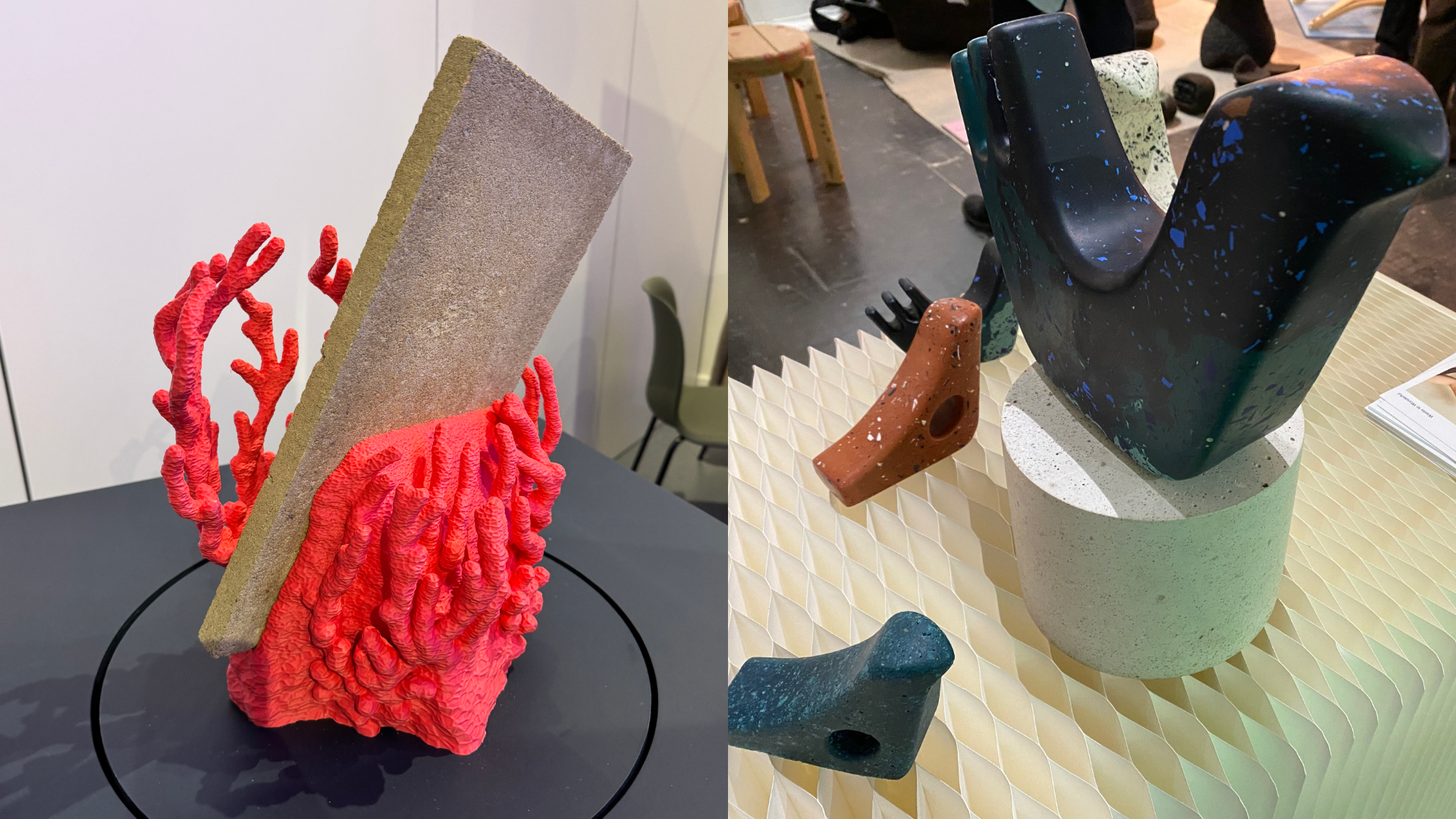
At Material Matters, we saw lots of innovative materials and products made from waste. A few highlights were tactile sculptural birds made from coffee grounds, wood scraps and DVDs that would otherwise have gone to landfill, and modular building bricks made from discarded plastic.
One thing’s for sure, our society needs to get better at dealing with waste, and if it can be reused to create other beautiful or useful products, then so much the better.
10. Accessibility isn’t an afterthought
The Neuroplaces exhibition was filled with innovative products and services designed with inclusivity in mind. From accessible signage like braille maps of toilet layouts, to computer stands that make heavy screens super easy to move, to workplace training in neurodiversity, it was great to see such focus on design that works better for everyone.
Wrap up
Walking around the various exhibits in Shoreditch, we were struck by the sheer human creativity and skill on show. From intricate beadwork and hand embroidery, to weaving and collage, there’s just something special about things made by real people. They have soul and inspire awe. When was the last time you could say that about an AI output?
See you next year Shoreditch!